A purchasing manager at a sporting goods retailer ordered 12,000 pairs of athletic socks in a single size run and labelled the range unisex. Three months later, almost a third came back as returns. Nothing was wrong with the yarn. The socks had been knitted around one foot shape, so the heel pocket sat high on women whose shoe size matched the men on the label, and the cuff rolled down inside the shoe on men with wider calves. On a sock label, gender is a sizing and construction decision long before it is a colour decision.
The short answer: men's and women's socks differ in three measurable ways. The length and width of the foot the sock is knitted around, the depth and position of the heel pocket, and the tension of the cuff and leg. Fabric weight, toe shape, pattern and price follow from those three. Above a women's US size 10 or below a men's size 6, the two categories overlap almost completely.
The Three Differences That Actually Change How a Sock Feels
- Foot length and width. Women's sock feet commonly run from about 22 to 26 cm heel to toe, men's from about 25 to 29 cm. Width matters just as much: a men's foot is usually broader across the ball, so a men's sock has a wider toe area and a shorter stretch ratio.
- Heel pocket depth and position. A women's sock usually has a deeper, shorter heel pocket set closer to the toe, because the heel sits nearer the ball of the foot on a shorter, narrower foot. Borrow a men's heel pocket for a smaller foot and the extra fabric collects under the arch.
- Cuff and leg tension. Men's cuffs are knitted with a wider elastic band and lower stretch, women's with a narrower band that stretches further. The same elasticity that holds a women's sock up on a slimmer calf can leave marks on a man with a 40 cm calf.
When a sock is sold only as small, medium and large with no gender on the label, it is built around foot length alone. That works well for casual and athletic styles, and poorly for sheer dress socks or compression products.
Sock Sizing: What the Label Is Really Telling You
Most size charts translate shoe sizes into sock sizes, which is convenient and slightly misleading. A woman with a wide foot and a man with a narrow foot can share a shoe size and still need different socks. The number that matters is foot length in centimetres, measured from the back of the heel to the tip of the longest toe while standing.
Sock size blocks overlap, which is why a 26 cm foot can sit in either the men's or the women's column of a chart.
| Category |
Common US shoe range |
Typical sock foot length |
Cuff and band |
| Men's |
6 to 12.5 |
25 to 29 cm |
Wider band, moderate stretch |
| Women's |
4 to 10.5 |
22 to 26 cm |
Narrower band, higher stretch |
| Children's |
8C to 5Y |
18 to 23 cm |
Soft band, low tension |
| Women's compression |
Sized by calf, not shoe |
22 to 26 cm |
Graduated pressure, measured fit |
Add 0.5 to 1 cm of allowance when you compare a foot measurement with a sock laid flat, because knitted fabric needs room to recover. A sock that is 1 cm short feels tight across the toes and wears through at the toe seam faster than the same style in the correct length.
Fabric, Thickness and Cushioning
Men's socks are, on average, heavier. A women's thin boat sock can weigh 15 to 25 grams a pair, while a men's wool crew sock knitted in the same facility often weighs 60 grams or more. Heavier yarn and terry loops mean more cushioning under the heel and ball, more warmth and a longer wear life. Women's fashion and sheer styles head the other way, using finer yarn counts, nylon blends and higher elastane content so the sock stays thin inside a narrow shoe.
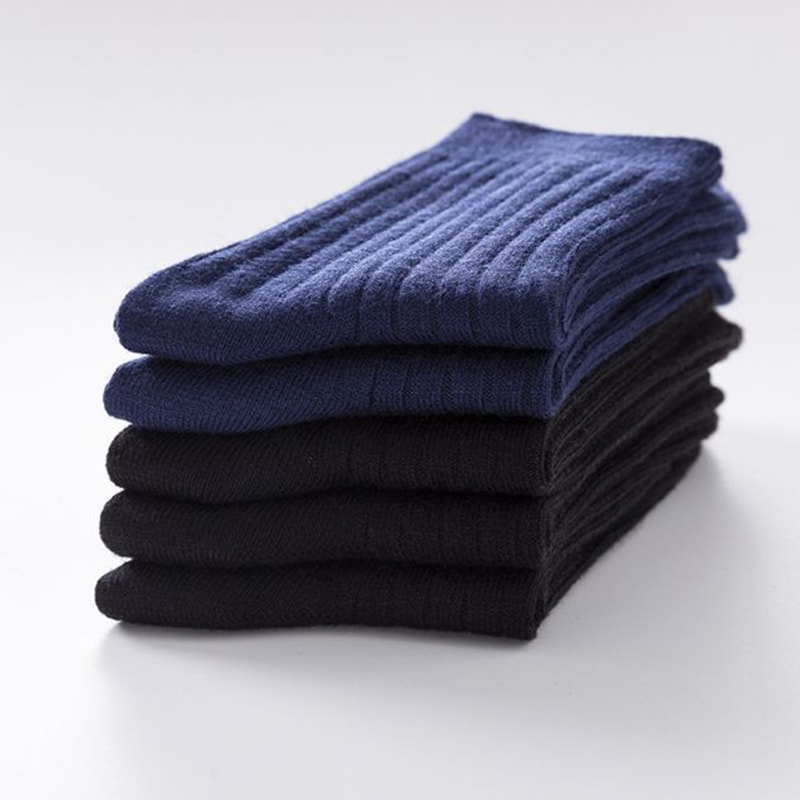 Men's Mid Length Woolen Socks for Autumn and WinterWool is a natural and environmentally friendly animal protein fiber, delicate and soft, with an insulation effect. Wool fiber is smooth and fluffy, and when woven into...View Product →
None of this is fixed biology. Plenty of women buy men's wool socks for hiking because they want the cushioning, and plenty of men choose women's thin cotton styles in summer. Fabric follows the use case far more than the gender printed on the packaging.
Heel Pockets, Toe Shape and Cuff Construction
Two socks with identical fibre content can fit completely differently once the machine settings change. A 200 needle machine knits a finer, slimmer tube than a 144 needle machine, and the difference shows in how the sock wraps the instep. Men's toe areas are commonly knitted broader and blunter, women's narrower and more tapered. Seamless toe linking, which removes the ridge across the toes, appears more often in women's dress and sheer styles, while men's sports socks often keep a reinforced linked toe because the yarn is thicker.
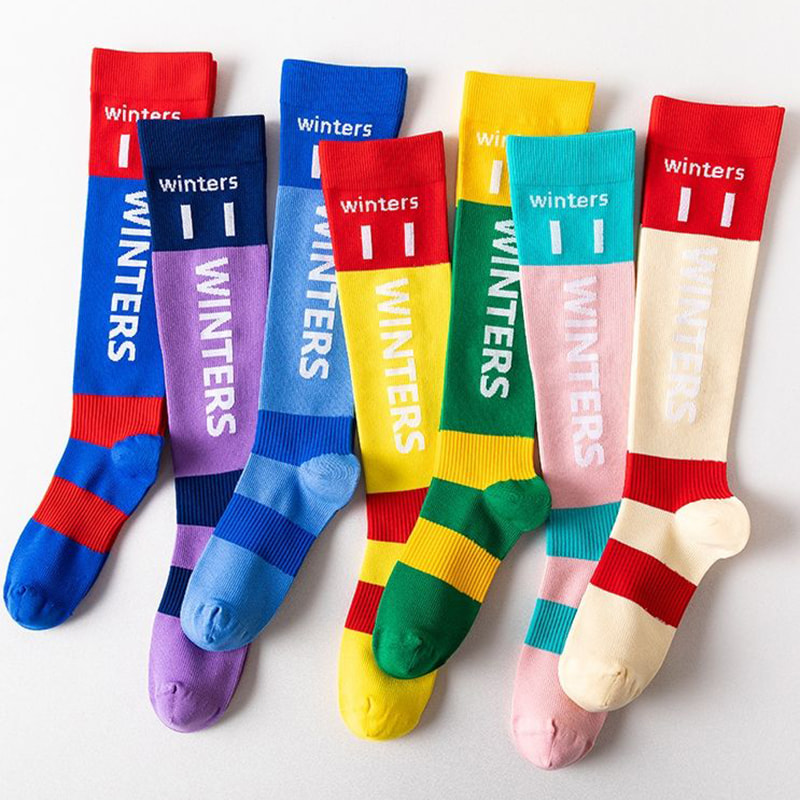 Sports Muscles Can Compression Socks for Women's Professional Fitness, Running, Skipping RAdopting gradient pressure design can effectively promote blood circulation in the lower limbs, provide more sufficient oxygen and nutrition for muscles, reduce lactat...View Product →
Compression is the clearest example of gendered sizing. A women's compression calf sock is usually selected by calf circumference rather than shoe size, and pressure is graded from ankle to calf so the sock stays in place without a tight band. Care matters too, since most socks fail at the heel and toe, and simple washing rules make a measurable difference, as our guide to extending the life of men's round mouth boat socks explains.
Style, Colour and Design Conventions
Walk through any retail display and the pattern is obvious. Men's styles lean on dark solids, ribbed crews and simple stripes. Women's styles carry more colour, lace trims, mesh panels, floral jacquards and lighter yarns, partly because fashion cycles move faster in women's categories and partly because thinner yarns take print and jacquard detail more cleanly. These are conventions rather than rules, and they shift with the market, but they still shape what a buyer sees on a shelf.
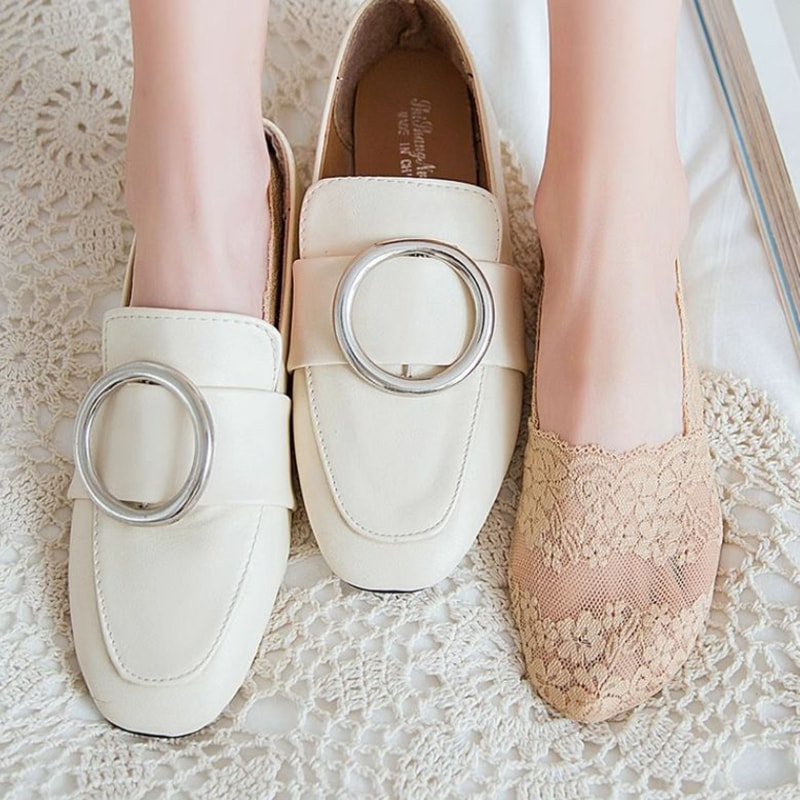 Lace Boat Socks for Women in Spring and Summer, Thin, Low Cut, Shallow Mouth Invisible SocThe main body is made of lace material, which is usually soft, breathable, and skin-friendly, and will not feel stuffy when worn. Lace elements not only look beautiful...View Product →
For anyone buying in bulk, design vocabulary and fit vocabulary are separate decisions. A lace trim does not require a narrower foot, and a broader toe box does not require a plain colour.
Can Men Wear Women's Socks, and Can Women Wear Men's?
Yes, with one adjustment: ignore the gender on the label and match foot length. Then check three points.
- Heel position. If the heel pocket sits under your arch instead of your heel, change size before deciding the style is wrong.
- Cuff comfort. If a band leaves a deep mark after an hour, the stretch ratio is wrong for your calf.
- Shoe volume. Half a size of extra volume is common when you move from a women's thin cotton sock to a men's cushioned crew.
A woman wearing a men's sock two sizes up will usually find the heel sits too high and the toe fabric bunches. A man wearing a women's sock in his shoe size will usually find the length workable but the cuff tight. Neither is a defect, just a mismatch between the sock shape and the foot it was knitted for.
What to Check Before You Buy or Order in Bulk
At BoLong Socks, a sock factory in Zhuji with 120 knitting machines, the same questions arrive from retailers, brands and trading companies. Here is the short checklist we send back.
- Ask for the size chart by foot length in centimetres, with men's and women's blocks listed separately.
- Ask which machine gauge the style runs on, because needle count sets how slim the sock feels.
- Ask for the elastane percentage and cuff stretch, since most returns start there.
- Order a wear test in both a men's and a women's size for any style you plan to label unisex.
- Confirm heel pocket depth for sizes at the top or bottom of your range.
Our own lines run from men's wool crews to women's silicone non-slip boat socks, children's combed cotton styles and dot coated trampoline socks, produced through design, knitting, boarding, quality control and packing under one roof, with FAMA, IDFL, BSCI and Primark audit certificates on file.
The differences between men's and women's socks come down to foot dimensions, heel shaping and cuff tension, and they are engineering choices rather than marketing ones. Fabric weight and colour usually follow. Once you know your foot length in centimetres and your calf measurement, the gender on the label becomes a starting point instead of a rule, and the returns rate tends to fall accordingly.


